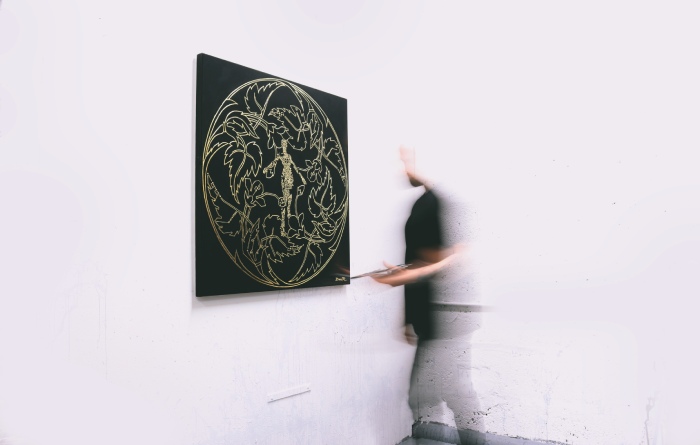
Gilding is the process of applying thin sheets of metal (most commonly gold) to a prepared surface.
The technique has been used for centuries in painting, sculpture, architecture, manuscripts, and decorative arts, creating surfaces that reflect light in a way that no pigment can achieve.
The symbolism of gold
While gilding is often associated with luxury or ornament, its historical role has been far more significant.
Across cultures, gold was used to distinguish what was considered important or sacred. In religious art, it helped create a sense of transcendence.
In manuscripts and objects of status, it communicated value and permanence.
What makes gilding unique
Because of its rarity and value, gold is not a random colour choice. Gold brings with it a history of cultural meanings that influence how the artwork or object is perceived.
Traditional gilding techniques remain highly specialised. Depending on the process, artists may spend days to weeks preparing surfaces before a single sheet of gold leaf is applied. The finished result is a material surface with a mirror-like quality that transforms any space it is placed in.
In David Roman’s art, gilding is a fundamental part of the concept of his work. He builds the relief, applies layers of traditional gesso, then lays genuine gold leaf, as in Homo Luminous 03, gilded in 22ct gold leaf. He also combines these ancient techniques with modern gilding materials.