Birmingham artists: The city’s contemporary art scene
Birmingham has a much richer art scene than most people would expect. It has established institutions, a long history of craft and making, and a growing network of independent artists working outside the usual London-centred art world.
For collectors, that creates an interesting opportunity. The most visible places to buy art in Birmingham are not always the most local. To find original work by Birmingham artists, it helps to look beyond the high srteet galleries and into studios, open events, and artists' websites.
Five things to know about Birmingham artists

1. A city with its own rhythm
Birmingham has its own creative identity, shaped by industry, craft, migration, education, music, design and independent culture.
2. A city of makers
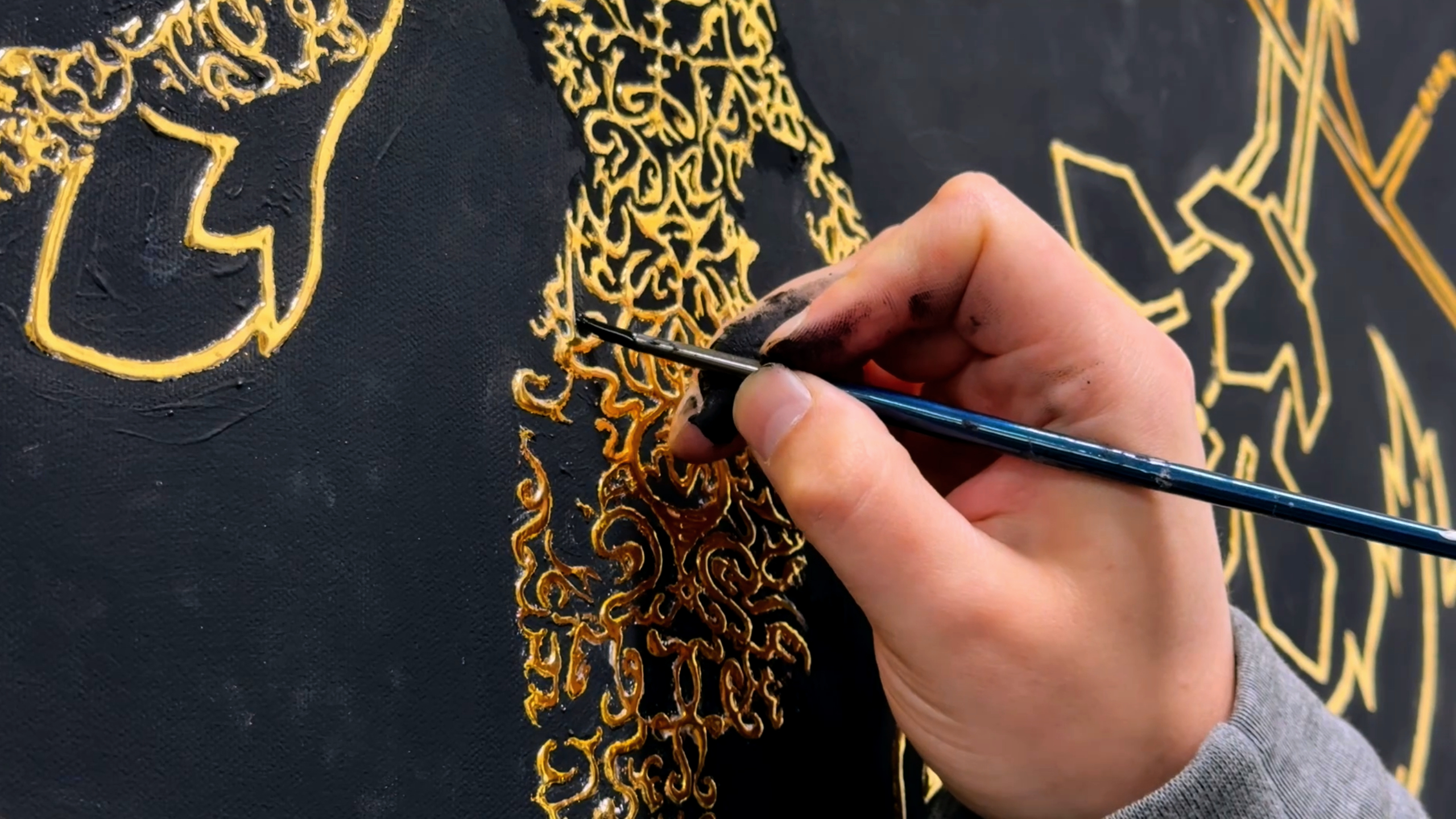
The city has a rich history of jewellery, metalwork, manufacturing and craft.
3. Many routes to discovery
Birmingham artists can be found through galleries, studios, cafés, open studios, markets, websites and social media.

4. Easier to find than before
Artists no longer need London attention before collectors can discover their work online.

5. Studios reveal more
Birmingham Open Studios lets collectors see work where it is made, and connects art lover with artists across the city.
Birmingham’s place in British contemporary art
The interesting thing about Birmingham is that it has never been only one kind of art city.
It has public collections, art schools, artist-led spaces and commercial galleries, but it also has a much wider culture of making. The Jewellery Quarter, the city’s industrial heritage, the Black Country next door, the music scenes, independent cafés, markets, design communities and creative neighbourhoods all feed into the context artists work within. Fine artists do not exist in a vacuum. The wider culture of a place changes what gets made.
That is especially true in Birmingham.
Birmingham School of Art traces its origins to 1843, and Birmingham Museum & Art Gallery holds a major Pre-Raphaelite collection, with Edward Burne-Jones among the figures strongly connected to the city. Ikon Gallery also gives Birmingham an internationally recognised contemporary art venue, while RBSA supports artists and visual arts engagement from its gallery in the Jewellery Quarter.
But Birmingham’s creative appeal is not only institutional.
A lot of the city’s creative energy feels more decentralised. Artists organise through smaller networks, studio groups, local events, independent exhibitions, cafés, markets and online communities. Areas such as Moseley, Digbeth, Stirchley, the Jewellery Quarter and the city centre all give access to different parts of that creative landscape.
London will always be the leader ,as one of the world’s major art centres. But Birmingham is catching up, especially as city-centre development, new residential growth and HS2’s Curzon Street project continue to reshape how people imagine the city’s future.
Here, collectors can meet local artists directly, follow their work as it develops, visit open studios, and buy pieces before wider recognition. That is one of the benefits of collecting locally - you are supporting the expansion of local culture at a time of major change.

"An original work carries the time and attention of the artist who made it. Both of those are our most valuable resources.
In this fast-moving world, choosing to live with something crafted slowly, with care... that is an act of resistance."
Three mistakes to avoid when exploring Birmingham artists
01
Assuming high-street galleries show the whole scene
Commercial galleries are part of the city’s art market, but they are not the whole Birmingham art scene. Many Birmingham artists work independently, sell directly, or appear through open studios, artist-led projects and smaller local events.
02
Missing open studios and degree shows
Some of the most interesting work appears before it reaches a gallery. Birmingham Open Studios, art school degree shows and independent exhibitions are often better places to discover local artists early.
03
Treating local art as amateur art
Local does not mean less serious. Many strong artists build practices outside major art capitals because it gives them more time, space and freedom to develop the work properly.
Questions about Birmingham artists
Birmingham’s art scene is active, independent and more established than its national coverage suggests. It includes institutions, artist-led spaces, open studios, commercial galleries, local markets and independent artists building audiences directly.
Birmingham’s art history includes figures such as Edward Burne-Jones, while more recent names connected to the city include Hurvin Anderson, Vanley Burke, Donald Rodney and Ruth Claxton. The current scene also includes independent artists building practices outside traditional gallery systems.
Birmingham matters because it offers something different from London. It has cultural infrastructure, a deep history of making, strong creative communities and enough independence for artists to build practices without following a single art-world route.
You can buy art from Birmingham artists through open studios, artist websites, local exhibitions, degree shows, markets, cafés, artist-led spaces and direct studio sales. Buying directly gives collectors a more rewarding connection to the artist and the work.
Yes. Birmingham Open Studios runs annually and allows visitors to meet artists, see work in homes and studios, and buy directly. The 2026 event is listed for 26–27 September and 3–4 October, 11am–5pm.
Explore more British art
From smaller format pieces to large-scale paintings, the artwork in the collection is made to reflect the contemporary times. Each piece is signed, documented, and available for collectors world-wide.
WELCOME
Please join the mailing list for the latest updates & email-only collecting opportunities.
Thank you!
