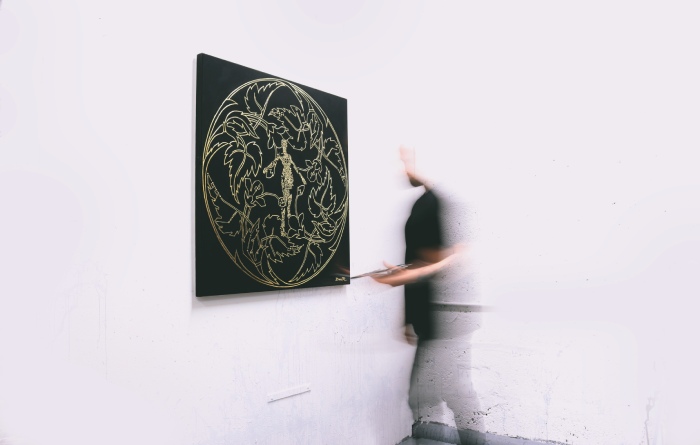
Gilded art can be highly valuable or it can be worth very little, and the difference has almost nothing to do with whether there is gold on the surface.
Material quality
There is a real cost difference between work gilded with genuine gold leaf and work decorated with gold paint or imitation leaf.
24ct gold leaf is a precious metal material. The gesso ground preparation can take days to weeks, the multiple sessions required to apply and burnish real gold leaf represent significant studio time.
A gilded work made with genuine materials and a solid process has real production costs embedded in it that are nowhere near other commercial substitutes.
However, that cost alone does not make artwork valuable.
Looking beyond the gold
The value of an artwork is determined by much more than the materials used to create it.
The artistic significance of a work depends on factors such as originality, craftsmanship, concept, rarity, and the artist's broader body of work.
Two gilded paintings may contain similar materials while having very different value.
Collectors are ultimately acquiring an artwork, not a commodity. The gold matters because of how it functions within the work, not simply because it possesses intrinsic material value.
This is particularly true in contemporary art, where artists use gilding for a wide range of conceptual purposes. Gold may reference history, value systems, spirituality, power, identity, or entirely personal concerns depending on the context.
In David Roman’s art, the gold works as part of the idea, not as a finish. Genuine gold leaf and hand-prepared gesso connect an ancient symbol of the sacred with the themes of inner transformation he explores through myth and symbolism. Every work is signed and documented by the studio.