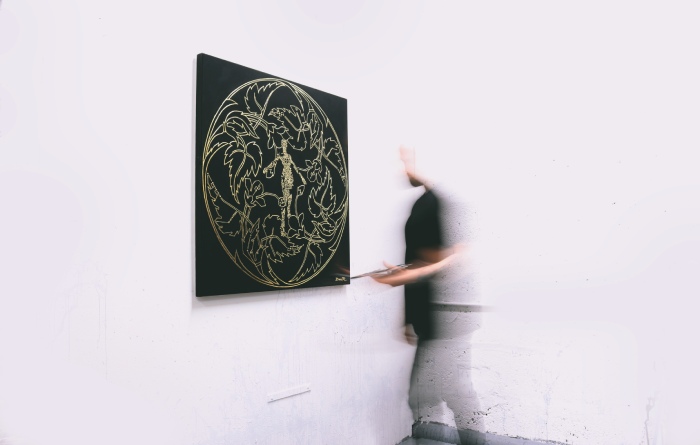
Gold Art Insight
What is the difference between gilded and painted gold?
Similar appearance, fundamentally different materials
At first glance, gilded surfaces and painted gold can appear similar - especially in a photo online.
Both create a gold-coloured effect, but when you look closer, you can tell by the shine that they're different materials.
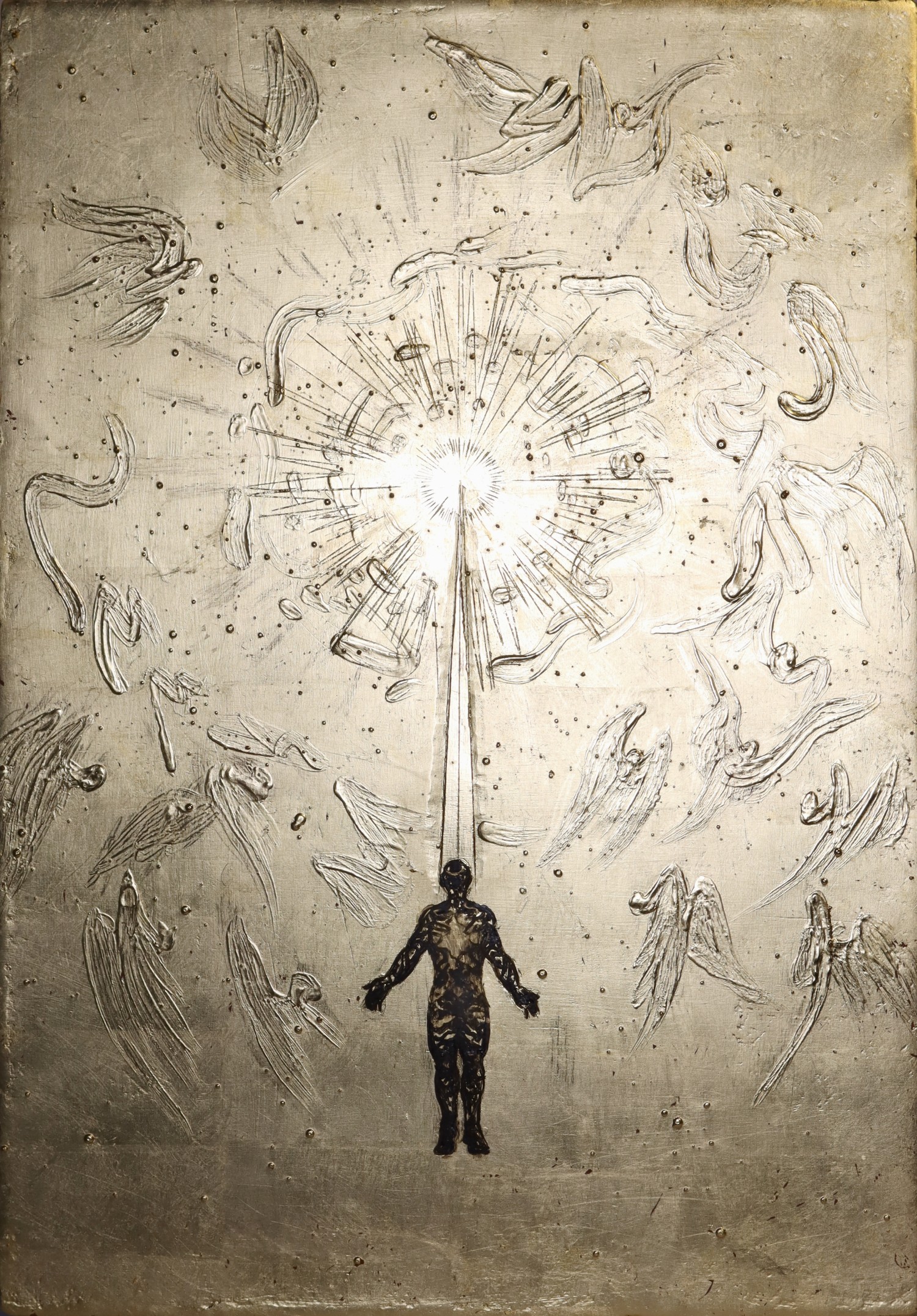
Gilding uses real gold in the form of leaf, powder, or shell gold, applied to a prepared surface. The gold in a gilded work is real precious metal. At 24ct it is pure gold; at lower carat values, it contains other metals (alloys) that shift the colour tone and make the gold leaf a bit easier to apply.
The finished metal's surface reflects light, so as the viewer moves, the appearance changes, creating subtle shifts.
The colour of gilded surfaces shifts between gold, orange-gold, and almost white depending on the angle of the viewer relative to the light source.
This effect can't be reproduced by any pigment.
Gold paints are just paint
Gold paint uses metallic pigment, often mica coated with iron oxide or titanium dioxide, mixed with a binder.
The particles reflect light, but the result is a uniform, relatively flat surface that does not shift in the same way genuine gold does.
Bronze powder, another common alternative, behaves similarly. Both imitate the colour of gold under certain conditions and at certain distances.
But in person, close up, or under changing light, none of them replicate real gold.
The accessibility of gold paint
Gold paint is also much cheaper and easier to use than real gold, which makes it accessible to many hobbyists and decor enthusiasts who just want a bit of shine in their home, without caring about materials.
Longevity
This is where the practical difference becomes most significant over time.
Genuine gold does not tarnish. A work gilded with 24ct leaf will hold its surface character indefinitely under stable conditions.
Gold paint and bronze powder, however, oxidise.
The warm, reflective finish of freshly applied gold paint will dull over years, and the process is not reversible without repainting. This is not a minor consideration for a collected work intended to last.
How to tell the difference
The difference becomes most noticeable when viewed in person.
Genuine gilding possesses a depth and luminosity that has a unique quality. This effect can't really be captured fully in photographs, so the artwork needs to be experienced in person to get a real sense of it.
The conceptual difference
For artists who work with gilding as a meaningful choice rather than a visual effect, the distinction between real and imitation gold is also a conceptual one.
Using genuine gold leaf draws on traditions that developed this material over millennia.
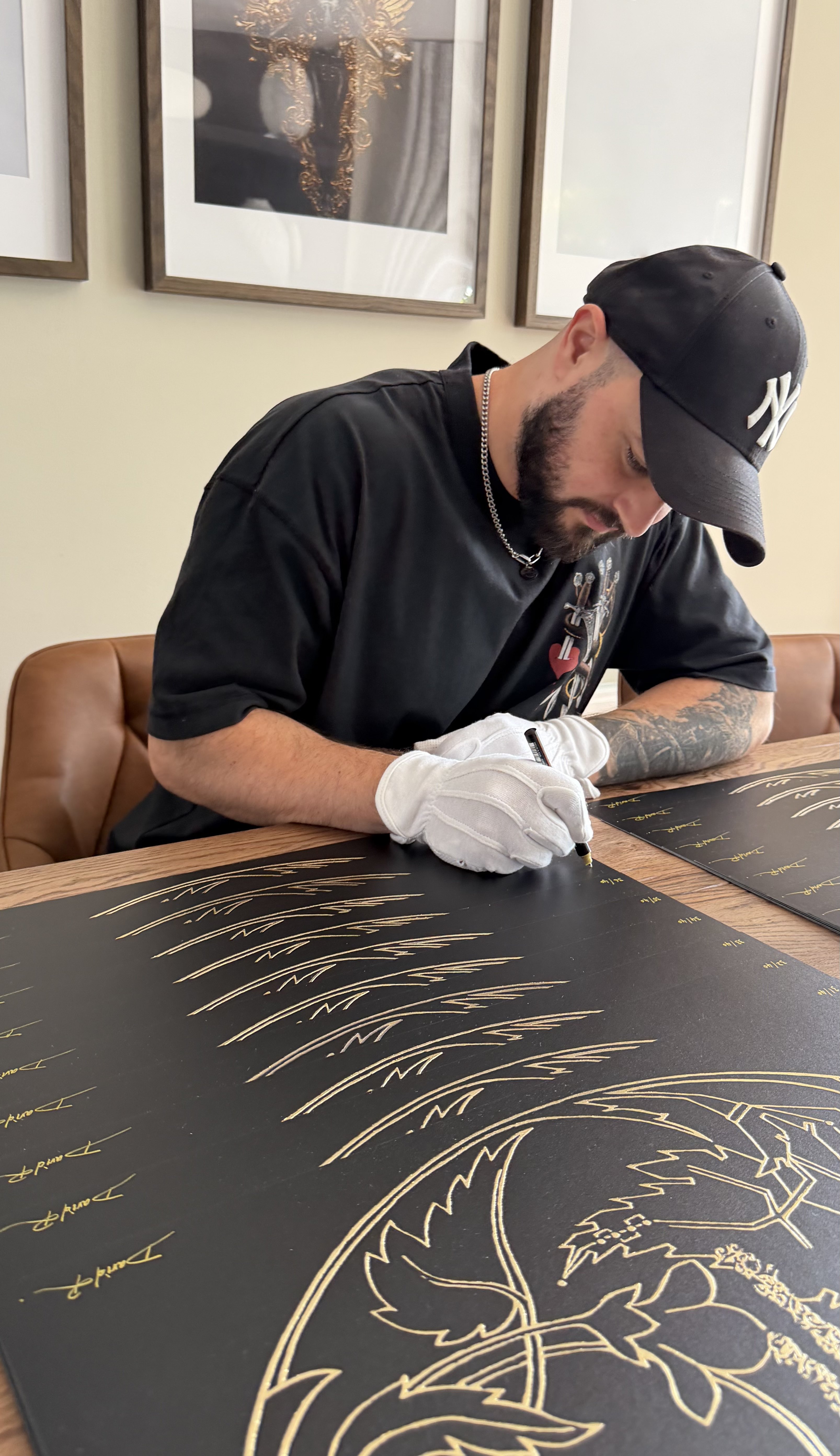
In David Roman's work, genuine gold leaf is used deliberately for this reason, as part of a broader inquiry into our capacity for inner transformation and awakening to our innate divinity.
Explore more gold art
From smaller format pieces to large-scale paintings, the artwork in the collection is made to reflect the contemporary times. Each piece is signed, documented, and available for collectors in UK and world-wide.

Discover your art buying archetype
Take a 3 minute quiz and find out what kind of art collector you are.