Gold Art Insight
What is the history of gilding in painting?
Why gold was used in art for centuries
The history of gilding in painting stretches back thousands of years.
Long before the development of modern materials, artists were using gold to create images that carried both visual power and cultural significance.
Some of the most influential examples emerged from Byzantine art. Gold backgrounds were used to depict a reality beyond ordinary experience.
Rather than functioning as decoration, gold became another layer in the meaning of an artwork.
Illuminated medieval manuscripts
During the medieval period, gilding appeared extensively in religious paintings and illuminated manuscripts.
Artists used gold to draw attention to important figures and create works that reflected light within candlelit interiors.
Gilding during the Renaissance
Renaissance painters continued many of these traditions before gradually shifting toward greater naturalism and illusionistic space.
They extended the use of gilded surfaces to decorative elements and architectural details.
Gold in the 1900s and contemporary art
Gold experienced another major revival through artists such as Gustav Klimt, whose work demonstrated that gilding could remain relevant within modern art.
.jpg)
Today, contemporary artists continue to reinterpret these traditions in ways that address current social, cultural, and philosophical questions.

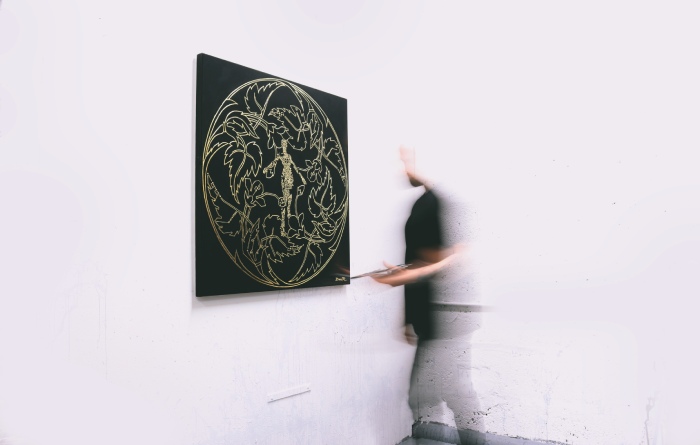
In David Roman’s art, gilding carries that history forward. He lays genuine gold leaf by hand over gesso and hand-built relief, using methods taken from icon-making, and sets it in figures from myth and symbolism. The original of The Alchemist, shown above, is gilded in 24ct gold leaf.
Explore more gold art
From smaller format pieces to large-scale paintings, the artwork in the collection is made to reflect the contemporary times. Each piece is signed, documented, and available for collectors in UK and world-wide.

Discover your art buying archetype
Take a 3 minute quiz and find out what kind of art collector you are.