British Art Insight
AI art and the British art market: What collectors should know
The rise of AI is changing the conversation around art
Few technologies have impacted the art world as quickly as generative AI.
In a matter of years, it has become possible to create images that resemble paintings, illustrations, photographs, and digital artworks with just a text prompt. For buyers, this has created an almost endless supply of visual content at very low cost.
The implications for artists are very unfavourable.
One of the most controversial aspects is how these systems are trained. Most of the imagery used to develop AI models has been gathered from the internet, without explicit permission, attribution, or compensation for the artists whose work helped build the datasets.
As a result, many artists view the technology as fundamentally different from traditional forms of artistic influence or inspiration, and demand stronger regulations and laws to protect their work.
For collectors, the challenge comes from a different angle
How do you know what you're buying?
Online marketplaces are increasingly filled with AI-generated images presented as original artwork. Some sellers are transparent about this. Others are not. In many cases, buyers have little insight into how the work was created, who made it, or whether there is a genuine artistic practice behind it.
This is where authenticity and proof of a sustained artistic practice becomes critical.
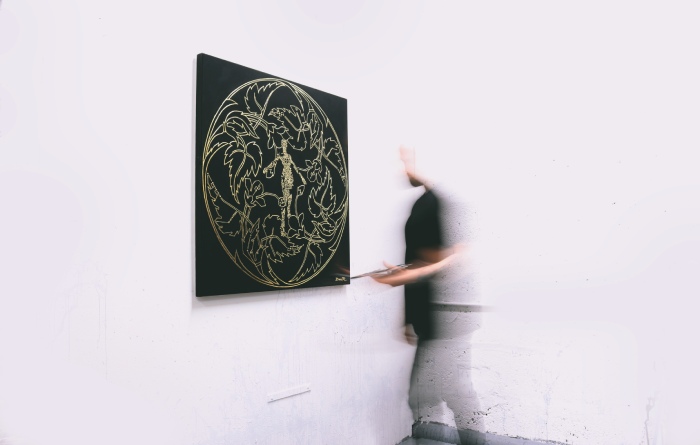
Collectors who value originality are beginning to look beyond the image itself. They want to understand the person behind the work, the ideas being explored, the materials being used, and the broader body of work that surrounds a particular piece.
.jpg)
A strong artistic practice leaves traces.
There is a visible development of ideas over time. There are influences, experiments, successes, failures, and recurring themes. The work exists within a wider context rather than appearing fully formed out of nowhere.
Ironically, the rise of AI may end up increasing the value of those qualities that were assumed standard up until now.
As images become easier to generate, authenticity, craftsmanship, the unique lived experience of the artists and their human touch become the differentiator.
This evolves the art buying process from just liking a piece to aligning with the vision and values of its creator.
Explore more British art
From smaller format pieces to large-scale paintings, the artwork in the collection is made to reflect the contemporary times. Each piece is signed, documented, and available for collectors in UK and world-wide.

Discover your art buying archetype
Take a 3 minute quiz and find out what kind of art collector you are.