
Contemporary Art Insight
Is shock value enough in contemporary art?
Shock value is not enough in contemporary art. It can draw attention, but attention is not the same as importance.
How shock and outrage fuelled contemporary art
For a long time, shock helped contemporary artworks cross into public awareness.
Traditional media loved art stories that created outrage because they gave newspapers, television and critics a simple argument to repeat: “Is this really art?”
Damien Hirst’s preserved shark became one of the defining images of 1990s British contemporary art because it was immediate, strange and impossible to ignore. Tracey Emin’s My Bed created public debate because it moved a private scene of emotional collapse into the gallery. Jeff Koons used explicit sexual imagery, celebrity and luxury production to blur the line between art, publicity and spectacle.

But these works were not only shocking. That is the important distinction. They were part of the artists' wider practices with consistent themes: death, intimacy, consumer culture, confession, desire, celebrity, authorship and the art market itself. The shock opened the door. The body of work gave the argument somewhere to go.
Shock in the age of social media
Social media has changed the value of shock. People see extreme images, arguments and outrage every time they scroll.
The threshold for surprise has also collapsed. What once created a national newspaper debate now becomes another post in a feed, that comes and goes with one scroll.
This makes shock cheaper.
A work designed only to provoke quickly starts to feel like a trick. It might get views, shares or outrage, but without depth, it's just a flash in the pan.

Maurizio Cattelan’s Comedian, the banana taped to a wall, shows the current version of this dynamic.
The work became famous because it triggered the familiar response that surrounds contemporary art: “Anyone could have done that.” Its power came from how perfectly it exposed public frustration with art, money, authorship and absurdity. The outrage was part of the artwork’s circulation.
Attention vs creative value for collectors
But that does not mean every act of provocation has value. Virality rewards whatever produces a fast reaction. It does not measure seriousness, skill, meaning or cultural depth.
A strong contemporary artwork needs more than shock. It needs a clear relationship to the artist’s wider practice. It needs to reveal something about the world, the artist, the viewer or the moment in which it was made.
From a collector’s perspective, the question is not “Did this get attention?” The better question is “Does this still matter after the reaction fades?”
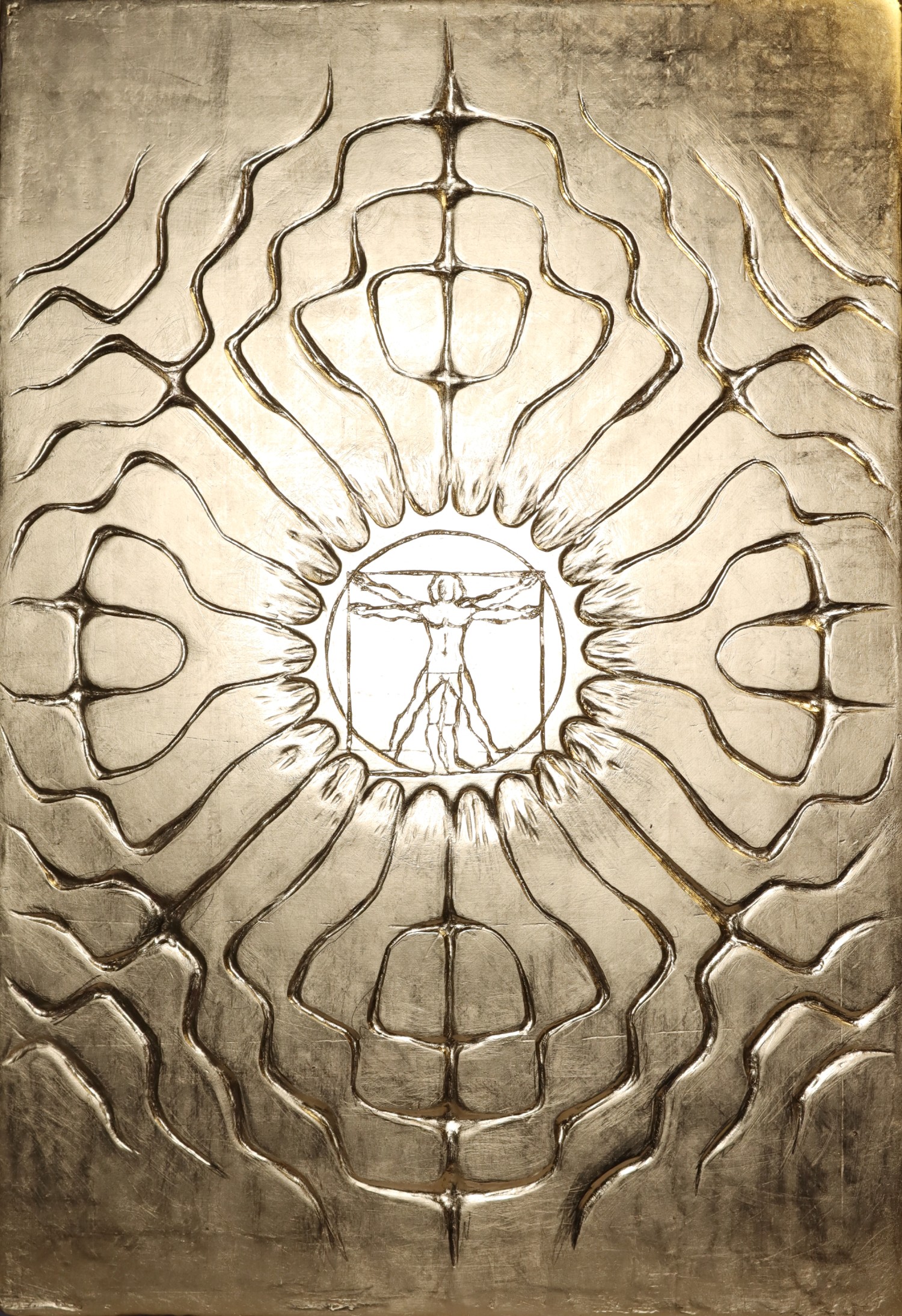
In David Roman’s practice, the art is not built around spectacle or rage. The work uses ancient materials, gold leaf and processes associated with sacred objects to address contemporary questions of human value, technological replacement and the loss of older stories that humanity within a wider cosmology.
Explore more contemporary art
From smaller format pieces to large-scale paintings, the artwork in the collection is made to reflect the contemporary times. Each piece is signed, documented, and available for collectors in UK and world-wide.

Discover your art buying archetype
Take a 3 minute quiz and find out what kind of art collector you are.