Contemporary Art Insight
When did modern art end?
Modern art is generally understood to end around the 1960s - 1970s, although there is no single final year.
Art history rarely evolves neatly from one period to another. Movements overlap, artists continue working, and new ideas replace older ones gradually.
The beginning of the end for modern art
The modern art period began with a break from academic tradition and developed through movements such as Realism, Impressionism, Fauvism, Cubism, Futurism, Expressionism, Surrealism, Bauhaus and Abstract Expressionism.
By the middle of the twentieth century, modernism had become the dominant story of mainstream art.
Abstract Expressionism is one of the clearest late-modern examples. In the 1940s and 1950s, artists such as Jackson Pollock, Mark Rothko, Barnett Newman and Willem de Kooning pushed painting towards large scale, gesture, abstraction and emotional intensity. Pollock’s drip paintings and Rothko’s colour fields still belong to the modernist belief that art could be renewed through form, material and direct experience.
By the 1960s, that belief came under pressure. Pop Art, Minimalism, Conceptual Art, performance, installation and postmodern thinking began to challenge the seriousness and purity associated with modernism. Andy Warhol’s Campbell’s Soup Cans from 1962 is a useful turning point. It brought advertising, repetition, celebrity and consumer culture into the gallery, undermining the idea that high art had to remain separate from mass culture.
What the end of modern art means
This is why modern art does not end because artists stopped painting abstractly or experimenting with form.
It ends because the cultural framework changed. The belief in progress, originality and rebellion against formal purity gave way to a more expansive and fragmented view of art and culture.
Contemporary art grows from that shift.
However, contemporary art is not a continuation of modern art, because its main driver is not reimagining what art could be. It responds to today's world shaped by globalisation, technology, social media, climate pressure, identity politics and unstable systems of value.
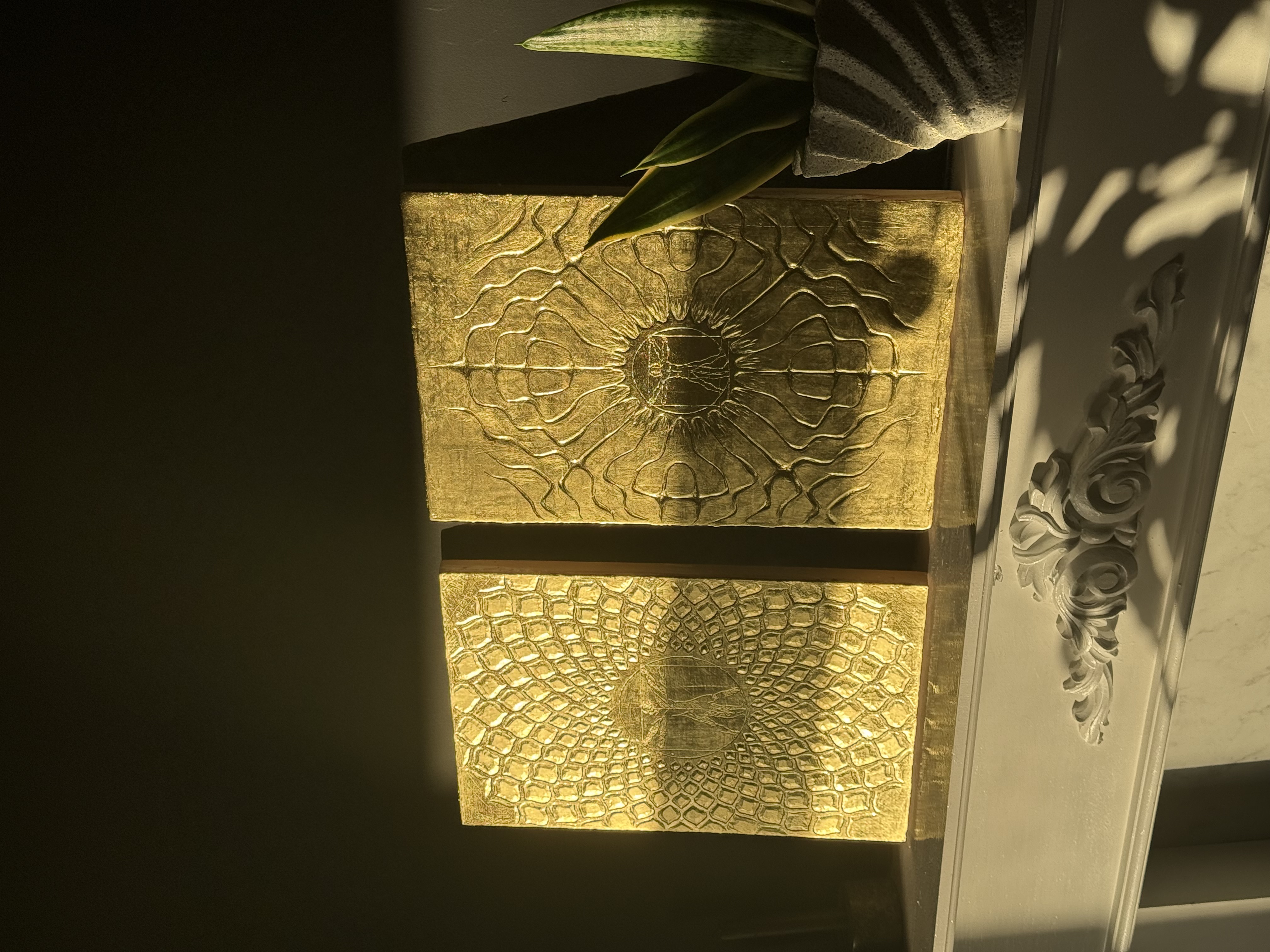
David Roman’s work comes from the contemporary side of that shift. He uses genuine gold leaf and figures from myth to explore inner transformation, mixing ancient gilding techniques with modern materials. The Homo Luminous series, shown above, is a set of seven artworks that revisit the Vitruvian figure. That Renaissance image placed the human within the wider cosmos of the natural world. Homo Luminous creates a new icon of the human in relation to a wider field of consciousness beyond the natural world, using the visual language of quantum waves and interference patterns.
Explore more contemporary art
From smaller format pieces to large-scale paintings, the artwork in the collection is made to reflect the contemporary times. Each piece is signed, documented, and available for collectors in UK and world-wide.

Discover your art buying archetype
Take a 3 minute quiz and find out what kind of art collector you are.