British Art Insight
Are the best British artists still based in London?
London still matters, but not in the same way
For much of the twentieth century, this question had a fairly simple answer.
An artist who wanted access to galleries, collectors, curators and serious professional opportunities was expected to be in London. The capital concentrated much of the British art world within a relatively small area, and moving there could feel less like a personal choice than a necessary stage in building a career.
That is no longer the whole picture.
London remains one of the world’s most important art centres. Many of Britain’s leading galleries, museums, auction houses, art schools and collectors are still based there. For exhibitions, networking and international visibility, the city continues to offer opportunities that are difficult to reproduce elsewhere.
But proximity to the art market is not the same as artistic quality.
Making meaningful work requires more than access. It requires time, space, concentration and the freedom to follow an idea before knowing where it will lead. It also requires the ability to fail, experiment and begin again without being influenced by immediate financial pressure.
For emerging and mid-career artists, those conditions have become increasingly difficult to sustain in London. High housing costs, expensive studios and the general pace of the city leave less room for the slow, uncertain process through which an artistic practice develops.
London may still provide greater access to the art institutions, but other cities provide more space to make the art itself.

British art has never belonged to one postcode
The idea that Britain’s most interesting artists must be based in London also overlooks how geographically varied British art has always been.
Artists are shaped by the places in which they live: their architecture, industries, landscapes, local histories and communities. A practice developed in Birmingham will not necessarily emerge from the same conditions as one built in Bristol, Glasgow, Manchester, Sheffield or Cornwall.
That difference matters.
When artists are concentrated in one cultural centre, the art world risks becoming narrower in both subject and perspective. Strong regional art communities allow different experiences, materials and visual languages to enter the wider conversation.
Birmingham, for example, carries a deep history of manufacturing, metalwork, jewellery, architecture and craft. The city’s relationship with making is not simply part of its past; it continues to shape the artists and designers working there today.
The strongest British art does not come from one place. It grows from artists who understand their local environment and develop a distinct point of view within it.
Social media has changed how artists are discovered
Historically, an artist often needed to live close to galleries and cultural institutions simply to be seen. Exhibitions, studio visits, private views and personal introductions were among the main routes through which work reached collectors and curators.
Digital platforms have weakened those geographical boundaries.
Artists can now document their process, share finished work, publish essays, speak directly to collectors and build an international audience from almost anywhere. A collector in London, Edinburgh or New York can discover an artist working in a Birmingham studio without waiting for a gallery to introduce them.
This does not mean that physical exhibitions or galleries have become irrelevant. Seeing art in person remains important, particularly when a work involves texture, scale, reflective materials or detailed craftsmanship.
What has changed is the route to discovery.
Collectors no longer have to rely solely on established institutions to decide which artists deserve attention. They can follow an artist’s work over time, understand the ideas behind it and make direct contact when a particular piece resonates with them.
Regional artists can build different kinds of practices
Working outside London is sometimes described as a compromise, as though an artist has accepted a smaller career in exchange for lower living costs.
In reality, it can support a different and highly ambitious kind of practice.
More affordable studio space can allow artists to work at a larger scale, explore labour-intensive techniques or develop bodies of work that would be difficult to sustain under constant financial pressure. It can also give them the independence to make work according to their own interests rather than responding too quickly to market trends.
This is particularly important for artists whose methods depend on craft.
Painting, sculpture, printmaking, ceramics, textiles, gilding and other material practices demand time. Surfaces need to be prepared. Techniques need to be learned. Mistakes cannot always be corrected instantly. The final work carries the evidence of repeated decisions, physical labour and accumulated skill.
So, are the best British artists still in London?
Some of them are.
Many exceptional artists continue to live and work in the capital, and London remains central to the national and international art market. But it no longer has a monopoly on artistic ambition, cultural relevance or professional opportunity.
The better question may be whether collectors are looking widely enough.
Artists throughout Britain are building solid practices away from the traditional centre of the art world. Some are represented by galleries. Others work independently, selling through their own studios and websites while forming direct relationships with the people who collect their work.
For buyers, this creates a broader and more personal way to collect art.
Purchasing directly from an artist offers the chance to understand how the work was made, follow the development of a series and build a relationship that extends beyond a single transaction. It also means that a greater proportion of the sale supports the artist’s future work rather than the overheads of a commercial gallery.
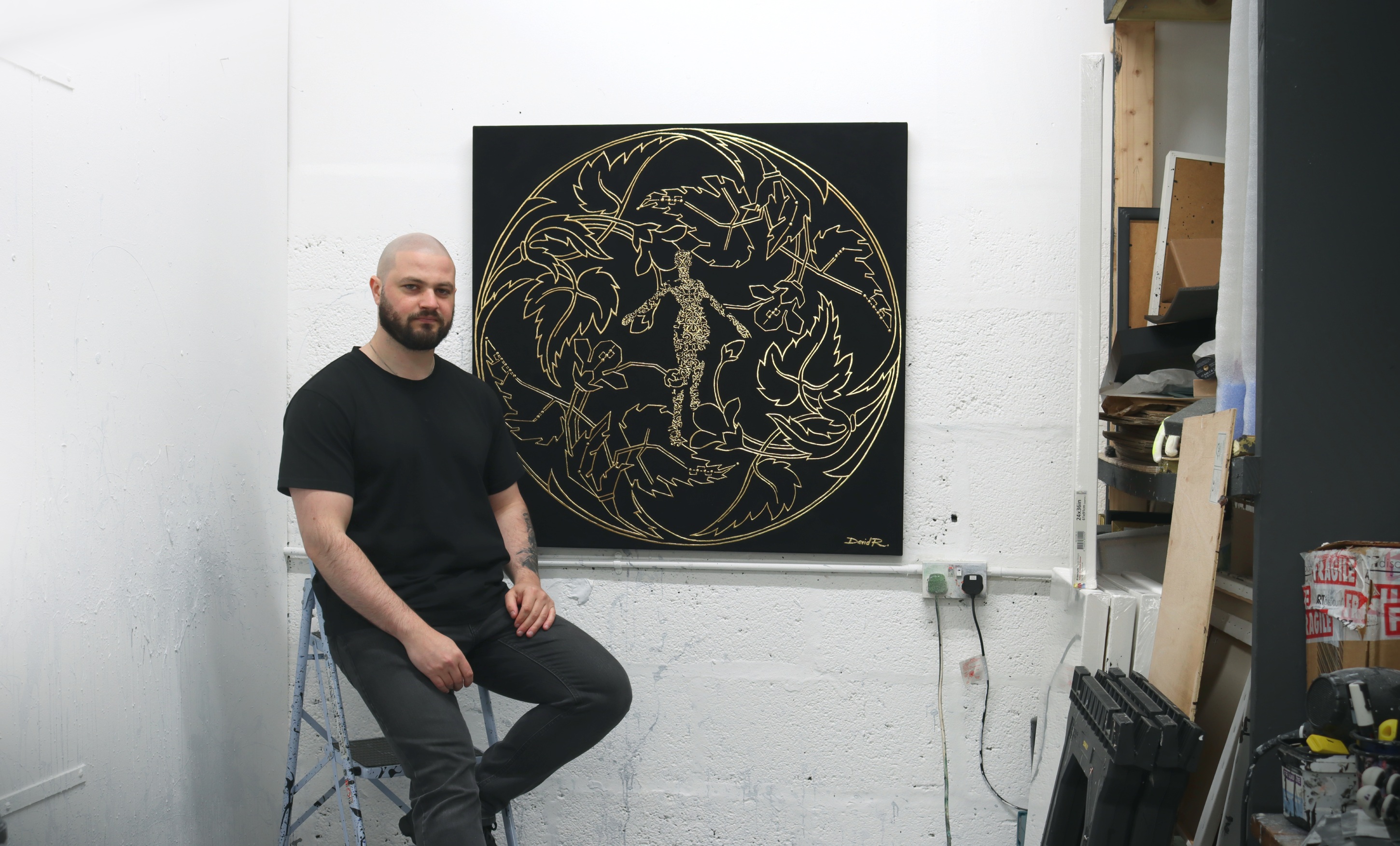
Discover contemporary gold art directly from the artist
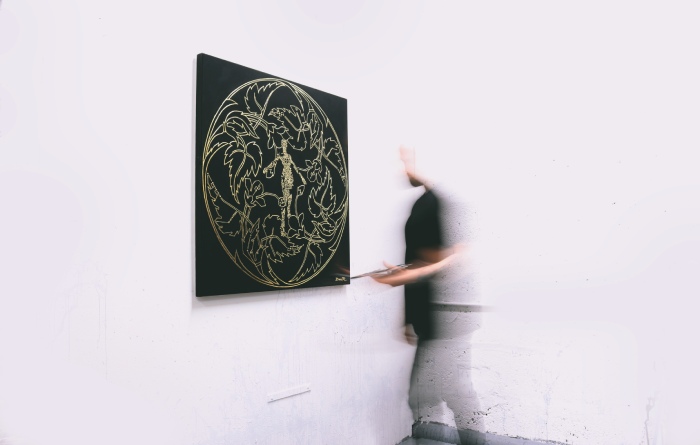
David Roman is an independent contemporary artist based in Birmingham. His work combines gold leaf, layers of traditional gesso and modern materials with figures from myth and symbolism, exploring inner transformation. The gold is not decoration. It carries centuries of meaning, and the layered surfaces take time to make: about 20 layers of gesso alone take almost two weeks to apply.
Collectors interested in contemporary art with gold, symbolic imagery and labour-intensive craft can buy available work directly from the artist. Buying directly gives a closer understanding of the practice, supports an independent British artist and allows a relationship with the artist to grow over time.
Explore more British art
From smaller format pieces to large-scale paintings, the artwork in the collection is made to reflect the contemporary times. Each piece is signed, documented, and available for collectors in UK and world-wide.

Discover your art buying archetype
Take a 3 minute quiz and find out what kind of art collector you are.