
Gold Art Insight
Is black and gold art modern or classic?
Historical tradition vs contemporary relevance
One of the reasons black and gold remains so compelling is that it refuses to belong to a single period.
The combination feels contemporary, yet it also feels ancient.
Gold has appeared in artistic traditions for thousands of years. From Egyptian artefacts, to Byzantine icons and illuminated manuscripts, to Japanese screens and Art Nouveau paintings, artists have repeatedly used gold to communicate significance, presence, and meaning. Black has often served as a counterpoint, providing depth, contrast, and structure.
Beyond any trend
Because both elements have such long histories, black and gold artwork often feels connected to something larger than a particular trend.
It can sit comfortably within a contemporary home while still carrying echoes of historical traditions.
This differs from many colour trends that emerge and disappear within a few years. Black and gold has survived because it is built on fundamental visual balance, rich in meaning.

Why it matters for collectors
For collectors, this longevity is worth considering. Artworks chosen because a look or an artist is popular, can feel dated surprisingly quickly. Work grounded in stronger ideas and genuine connection to the work, tends to remain a treasured purchase.
David Roman’s work sits in both worlds. He gilds by hand with methods taken from icon-making, and his figures come from myth and art history. Homo Luminous 03, gilded in 22ct gold leaf, revisits the Vitruvian figure, a Renaissance image of the human body.
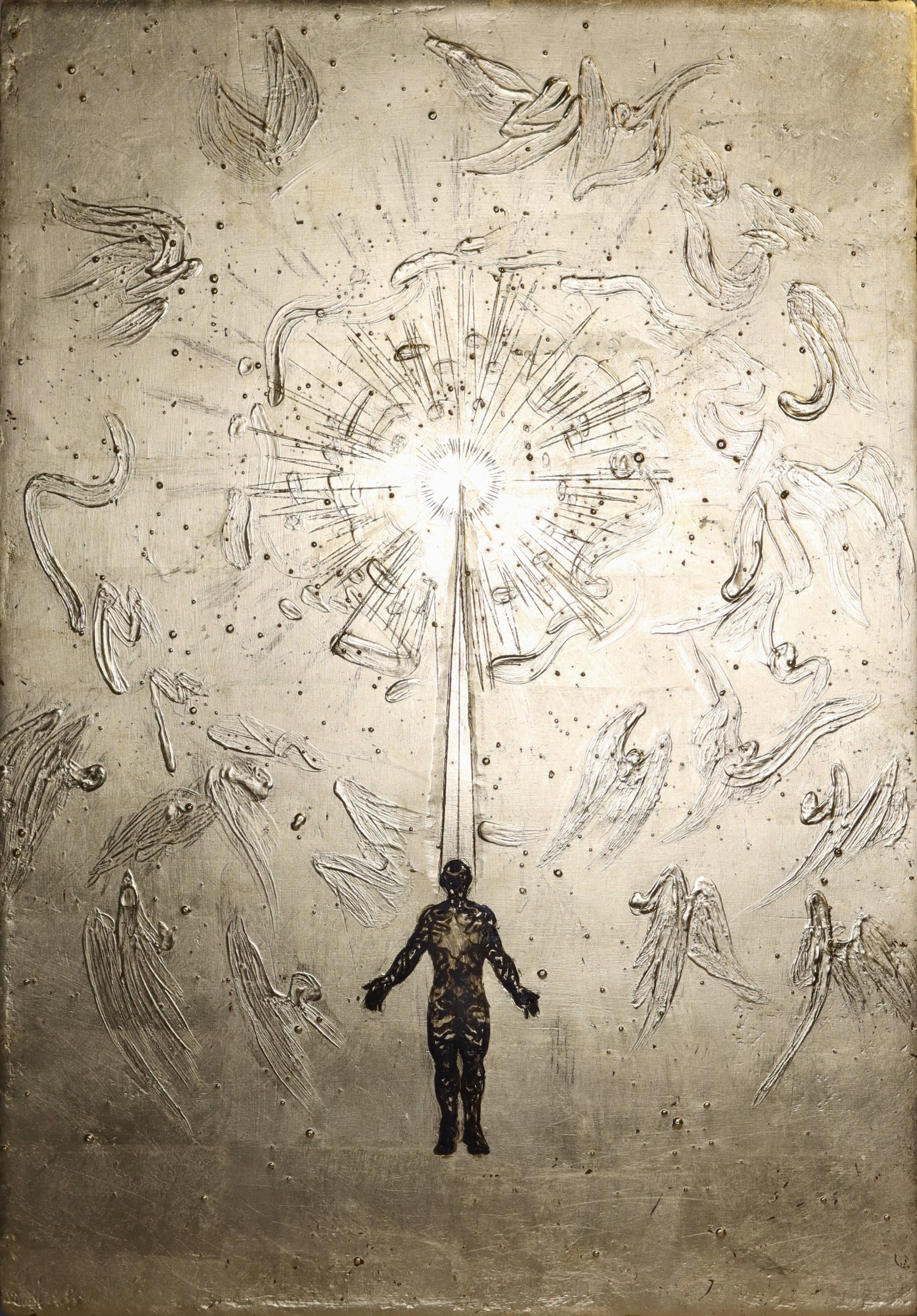
Explore more gold art
From smaller format pieces to large-scale paintings, the artwork in the collection is made to reflect the contemporary times. Each piece is signed, documented, and available for collectors in UK and world-wide.

Discover your art buying archetype
Take a 3 minute quiz and find out what kind of art collector you are.