Original Art Insight
Is affordable original art a good investment over time?
The investment question is one of the first things that's brought up when diving into art collecting, and it is worth addressing it directly. Yes, original art can increase in value over time. The more useful question is under what conditions, and whether financial return is the right frame to use when thinking about an acquisition at any price point.
What actually drives value in original art over time
The factors that tend to support long-term value in original art are quite consistent. Material quality is one: work made with archival materials, properly prepared surfaces, and stable pigments ages differently from work made without concern for longevity. A piece made with 24-carat gold leaf on archival paper will look very different in thirty years from a similarly priced work on with imitation or lower-carat gold that tarnishes. The object's physical condition is part of its value, and material quality determines that condition.
The artist's trajectory is the larger variable. Work by artists who develop a consistent and serious practice over time, who attract critical or institutional attention, who build a body of work with coherent concerns and growing recognition, tends to appreciate in value as that trajectory becomes visible to the broader market. The collectors who benefit most from this are the ones who acquired work early, before the acclaim became reflected in the price.
Documentation supports value independently of these factors. A well-documented work with a signed certificate of authenticity and a clear provenance record is a more defensible asset than an undocumented one of comparable quality, because its identity and history are verifiable. Provenance is not just a legal nicety. It is what connects the object to its maker and to the chain of ownership that constitutes its history.
The limits of the investment frame
Financial return is a legitimate consideration, but it is a poor primary motive for collecting at any price point. The art market is not a securities market. It rewards knowledge, patience, and judgment about quality in ways that short-term thinking completely misses. Collectors who buy work they do not care about, just seeing it as an asset that will appreciate, tend to be disappointed. Collectors who buy work they genuinely want to live with, from artists they have taken the time to understand, tend to do better on every measure.
The best way to look at investing in original art is this: a well-chosen original from a serious artist, bought at an accessible price point (to you), is an acquisition that rewards you daily in ways that most things you spend money on don't even come close. The primary return on investment is joy, inspiration, belonging, feeling seen, beautiful memories, spending your life surrounded by beauty. And while the work may appreciate in monetary value, it will certainly appreciate in meaning as the years pass. Both of those outcomes depend on the same thing: starting with work that you connect with, and that's affordable to your budget.
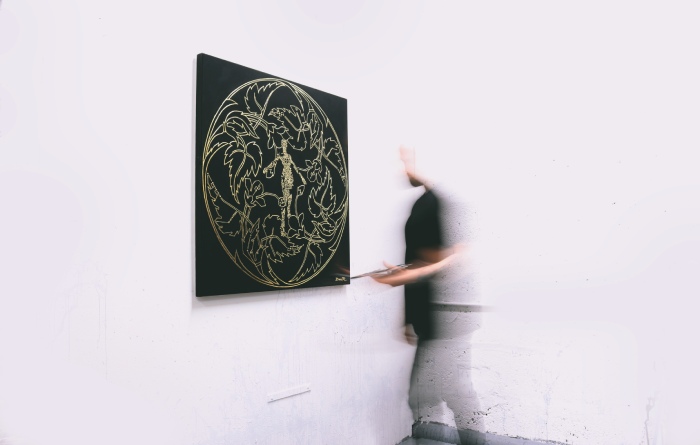
David Roman produces work across a range of formats, originals and limited editions, from smaller pieces and works on paper through to large-scale canvases. His art explores the intersection between matter and consciousness, made at a moment when what it means to be human is being reduced to data and productivity.
Discover your art buying archetype
Take a 3 minute quiz and find out what kind of art collector you are.
Glossary
Original Paintings for Sale
How to Discover Original Work That Stands Out
How to Gift Meaningful Original Art
How to Discover and Buy Original Art from UK Artists
Explore more original art
From smaller format pieces to large-scale paintings, the artwork in the collection is made to reflect the contemporary times. Each piece is signed, documented, and available for collectors world-wide.

Discover your art buying archetype
Take a 3 minute quiz and find out what kind of art collector you are.
Stay connected to the studio
Get first previews of new works, email only sales, and studio notes.
