People usually assume that appreciating art requires specialist knowledge or formal education. In reality, developing your own taste is less about expertise and more about paying attention to your responses over time.
The best collectors are not born with great taste, they develop it
The first step is to spend time looking at a wide variety of work. The more art you encounter, the easier it becomes to recognise patterns in what consistently attracts your attention. You begin to notice recurring themes, materials, colours, or ideas that resonate with you personally.
The second step is learning to ask better questions. Instead of asking whether an artwork is objectively good, ask why it interests you, why it repels you, or why it leaves you indifferent. What emotions, ideas, or memories does it provoke? What keeps drawing you back to it?
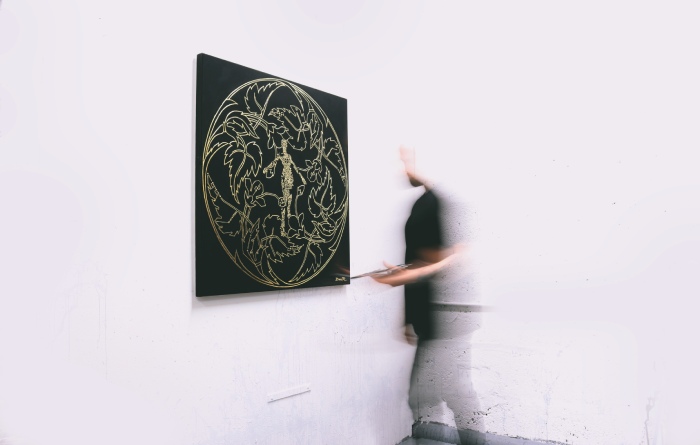
In David Roman's art, collectors are often drawn to the tension between ancient craft traditions and contemporary questions about technology and identity. The work feels ancient but also contemporary. The use of gold, sacred geometry, dissolving figurative elements, and hand-crafted surfaces, create an entry point that invite viewers to engage deeper with the ideas behind the work.
Taste grows through curiosity
Developing taste is not about finding the "right" answer. It is about becoming more aware of what genuinely matters to you. Looking and being present with your body's responses is the actual work.
Reading about the themes, inspirations, and wider context that the artist operates within, can unlock even more layers of the artwork.
The more curiosity you bring to looking at art, the more confident your own perspective becomes.